Just here funding cool stuff that actually matters
Rethink.
Rethink.
The Bardia Project: Backing the Unsung Heroes of Nepal’s Wild Frontline
Too many children and villagers have lost their lives. Join us in supporting the communities that choose coexistence over retaliation, where villagers, youth, and local guardians protect both people and wildlife, even in the face of fear and loss.
The Bardia Project - The Unbelievable Story
Nepal is home to one of the greatest conservation success stories in the world. Over the past two decades, the country has seen extraordinary increases in its tiger, rhino, leopard and elephant populations.
But protection comes with a price.
As wildlife numbers grow and habitats shift, animals are being pushed closer to villages, farmland, and forest-edge communities. And when people and predators share the same space, conflict becomes inevitable.
We’ve received many messages from locals in Bardia describing recent human-wildlife incidents, and even seen photos from the aftermath, including loss of life. A reality that has been difficult to face, but it shows just how real and urgent the situation is for the people living here.
And yet, despite the constant fear, something unexpected is happening in Bardia.
In most parts of the world, human–wildlife conflict leads to anger, retaliation, and calls to remove or kill the animals responsible. But here, something different and remarkable is unfolding:
Communities are not retaliating. Despite personal loss and an ongoing pattern of fatal attacks, they still want wildlife to remain wild and protected. They still want to find a way to coexist with the species living around them, choosing solutions over revenge or fear.
That’s where the CBAPU (Community-Based Anti-Poaching Unit) comes in: a group of local volunteer teams supporting families, reducing conflict, and helping create safer ways for people and wildlife to coexist.
Our mission is to support them, and we invite you to help!


The Remarkable Heroes: CBAPU & Local Communities
Despite the fear, despite the losses, communities in Bardia are not calling for the wildlife to be wiped out. They’re not asking for tigers, elephants or leopards to be “removed” so life can go back to normal. Instead, they’re asking:
How do we keep our children safe?
How do we protect our crops and homes?
How do we do that without losing the wildlife that makes this place so special?
CBAPUs are grassroots groups made up of local youth and community members who live in and around Nepal’s national parks and buffer zones. Many of them have been personally affected by human–wildlife conflict - many have lost relatives, livestock or income - and still choose to protect both people and wildlife. The model started in the early 2000s, when it became clear that government patrols alone couldn’t stop poaching and illegal logging.
Today, Bardia’s CBAPUs play a vital role in protecting the area and they:
Patrol forests, villages and corridors to deter poaching, illegal logging and wildlife crime
Act as the “eyes and ears” of park authorities, army units and conservation organisations
Help reduce human–wildlife conflict by warning villages, guiding people on safety, and safely redirecting wildlife that stray into settlements or crops
Raise awareness in schools and communities about conservation, safety and legal issues
Support alternative livelihoods so families don’t have to rely on illegal forest extraction to survive
The CBAPU model already works. Through 'Rethink: The Bardia Project', we want to make sure it can keep working and keep evolving as a self-sustaining model in one of Nepal’s most important wildlife regions.
When paths cross, lives on both sides are at risk
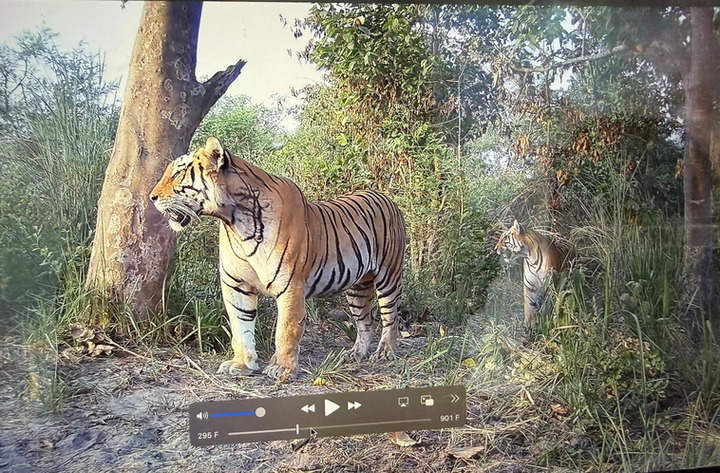
In Bardia, animals and villagers often share the same trails, just hours or minutes apart. What begins as a walk to collect firewood can end in tragedy: lives lost every month, families shattered, and fear spreading through villages. And for wildlife, the consequences are equally devastating. When a fatal encounter happens, endangered animals are often targeted, and pressure to remove, capture or kill them increases.


Same path,
3 hours apart
CBAPU Volunteers are working to mitigate risk, protect families, and support healthy wildlife populations.
With equipment such as camera traps, GPS, computers and drones, local volunteers can track animal movement, warn and educate nearby villages, and prevent deadly encounters before they occur - Protecting both people and endangered wildlife in the region.
Same path, 20 minutes apart
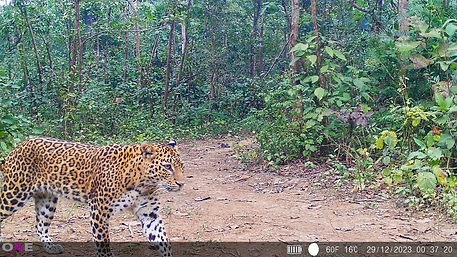

Woman, Leopard, Elephant...
All sharing the same path


The Gear That Protects Lives on Both Sides
Drones - Preventing Elephant Attacks Before They Start
Drones are one of CBAPU’s most effective tools for managing elephant conflict.
Elephants dislike the sound, which means drones can safely guide them away from villages, crops, and sleeping families at night. Volunteers use drones after spotting elephants with flashlights, helping prevent crop destruction and avoid deadly encounters.
Camera Traps - Tracking + Early Warning + Community Awareness
Camera traps are placed in community forests where villagers collect grass and firewood. Many people walk these paths unaware that a tiger or leopard passed hours earlier. Footage from these cameras is used to monitor wildlife and educate communities to prevent fatal encounters.
GPS Units – Mapping Conflict & Keeping Volunteers Safe
GPS devices help CBAPU volunteers accurately record where conflicts occur and where camera traps are placed, allowing them to return quickly to high-risk sites. By mapping these locations, teams can spot patterns, identify dangerous zones before villagers walk into them, and plan smarter patrol routes.
Laptops & Hard Drives – Reviewing Footage & Educating Communities
Laptops are essential for checking camera trap memory cards and reviewing high-resolution footage with local communities. Volunteers use them to show families which animals are moving through their forests and when, helping people understand risk patterns and stay safe. Hard drives store thousands of videos and photos, preserving evidence, documenting conflict cases, and supporting long-term awareness efforts.
Cameras – Documentation, Evidence & Protection Through Visibility
Cameras are a critical tool for documenting wildlife movement, conflict incidents, and CBAPU’s field operations. Volunteers use cameras to capture clear photographic and video evidence of animal presence, damaged crops, and conflict situations, which helps support rapid response, reporting, and coordination with park authorities.
Cameras are also used to document CBAPU’s work in the field, creating visual records that support community education, training, and long-term conservation awareness. High-quality imagery helps build trust with local communities, strengthens accountability, and ensures that incidents and outcomes are accurately recorded rather than going undocumented.
Other essential gear includes:
-
Torches & flashlights
-
Binoculars
-
Patrol transport & fuel
-
Cameras
-
Audio equipment
-
Memory cards
-
Nursery supplies

CBAPU are underfunded
CBAPU’s community-led model works. It prevents conflict, protects families, and keeps endangered wildlife alive. But despite its effectiveness, the teams on the ground remain severely underfunded.Most volunteers patrol on foot or borrowed motorbikes. Many share a single working flashlight. Camera traps are limited, drones are scarce, and there’s rarely enough fuel to reach the furthest conflict zones. Even simple items like memory cards, batteries, or meals on patrol are often out of reach.
These volunteers are doing extraordinary work with almost nothing. Imagine what they could do with the right support.

How Rethink. is backing CBAPU through The Bardia Project in 2026 and beyond.
Rethink is committed to strengthening CBAPU’s community-led model by providing the resources, visibility, and long-term support these volunteers need to keep people and wildlife safe. Our role is not to replace their work, but to amplify it by helping fund essential equipment, supporting operations, bringing in the right partners, and sharing their story with the world so their efforts are recognised and sustained. Through The Bardia Project, we’re building a long-term partnership that ensures CBAPU has the tools to continue preventing conflict, protecting families, and safeguarding endangered species well into 2030 and beyond.
Our 2030 vision is a fully self-sustaining CBAPU in Bardia, funded long-term and strengthened through eco-tourism, able to scale its lifesaving work across the region.
Beyond equipment and funding, Rethink will walk alongside CBAPU by offering business guidance and helping build eco-tourism opportunities that generate long-term income for local families. Our focus is to empower the community with the skills and structures needed to sustain this lifesaving work for decades to come.
CBAPU already has many of the foundational pieces in place to achieve a self-sustaining model. This includes a homestead and community treehouses that form the base for eco-tourism and long-term presence in the area. They also operate one patrol vehicle, currently used for night-time rapid response, which can also be used during the day for safaris for tourists and photographers inside the park.
With the right support, these existing assets can be strengthened, expanded, and connected into a model that funds protection work, supports local livelihoods, and keeps both people and wildlife safer - long into the future.
How You Can Help: Sponsorship & Donations
You can support this initiative in a very direct way.
By donating through our GoFundMe, you help fund mission-critical gear and operations that go straight into the hands of the volunteers on the ground - including camera traps, drones, communications equipment and essential field tools.
We will deliver our next gear drop in February 2026, which means your contribution has a clear, immediate and tangible impact.
We welcome both smaller and larger contributions. Every donation matters, $100 can literally help to save lives, and we are deeply grateful for all support, no matter the size.
Contribute to our GoFundMe here:
Become a Sponsor:
If you or your company are interested in a strategic collaboration, sponsorship position, or supporting the Bardia project initiative as a whole, we’d love to hear from you.
This includes:
-
Sponsoring larger gear drops or operations
-
Long-term or recurring support
-
Strategic partnerships around the initiative
For sponsorship or collaboration inquiries, please get in touch at:
hello@rethinkmakers.com
Support our fundraiser to get more gear in the hands of the CBAPU Volunteers: https://www.gofundme.com/f/help-the-brave-heroes-of-nepal
Every dollar you donate or sponsor goes directly to field equipment and on-the-ground operations. Rethink covers all administrative and project management costs separately, ensuring your contribution funds only what CBAPU urgently needs - gear, tools, fuel, and field support. Nothing is taken for overhead.
For inquiries of sponsorship/collaboration email hello@rethinkmakers.com
Help Save Lives!
All contributions are allocated toward the most relevant equipment and field operations within each impact tier, based on the team’s current needs.
Global voices are coming together for Bardia
Project collaborators
Project Wild Earth / Matt Prior
Together, we share a long-term vision: helping CBAPU become fully self-sustaining, expanding their impact, and encouraging more partners and organizations to join this vital work in Bardia.
